
Fees · 6 min read
Crypto to INR Fees Explained: What You Actually Pay
Every fee involved when converting crypto to INR in India — network fees, spreads, platform fees, withdrawal fees and TDS — and how to compare platforms fairly.
By Bryan Aaron · Updated
Quick answer
Converting crypto to INR in India can cost up to five things: the network (gas) fee, the exchange-rate spread, a platform fee, an INR withdrawal fee and 1% TDS where it applies. The fair way to compare platforms is the final rupee amount that reaches your bank for the same crypto at the same moment.
Two platforms can advertise the "same" USDT rate and pay you very different amounts. That's because the cost of converting crypto to INR is spread across several places. Here's every one of them and how to compare properly.
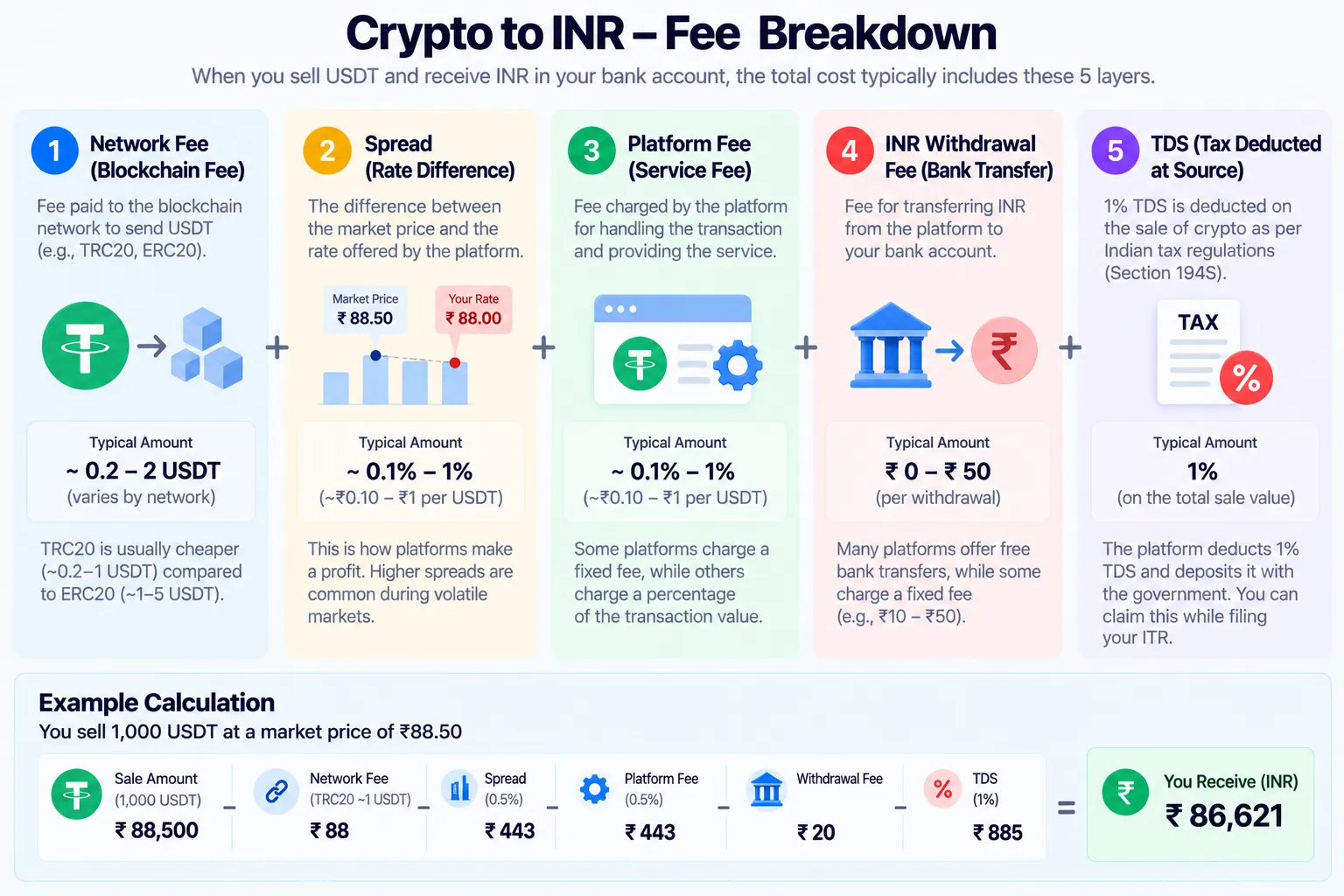
1. Network (gas) fee
Paid to the blockchain when you send crypto, and charged by your wallet or exchange — not by the offramp. It depends on the network: TRC20, Solana, Polygon and BSC are cheap; ERC20 and Bitcoin can be expensive when the network is busy.
2. Exchange-rate spread
The difference between the market rate and the rate you're offered. Many platforms advertise "zero fees" and earn entirely from a wide spread. It's the hardest cost to see because it's buried in the rate.
3. Platform fee
An explicit fee for the conversion. On Disburz today it's ₹50 fee + 3 USDT network deduction per USDT sale, charged by the payout partner and shown in your quote before you send. Fees can change; the pricing page always shows the current numbers.
4. INR withdrawal fee
Some exchanges charge a flat fee to move INR from your exchange wallet to your bank. With a direct offramp there's no intermediate INR wallet — the payout goes straight to your account.
5. TDS
Not a fee, but it reduces the cash you receive at the time of sale where it applies. It can be claimed against your tax liability. Details in our crypto tax and TDS guide.
How to compare platforms fairly
Ignore the headline rate and compare the final INR that reaches your bank for the same amount of crypto, on the same network, at the same moment. That single number includes the spread, the platform fee and any withdrawal fee. The Disburz calculator shows that number before you send.
Worked example (live)
| Arrives at Disburz | 1,000 USDT (TRC20) |
| Network deduction | − 3 USDT |
| Rate | 1 USDT = ₹96.00 |
| Converted value | ₹95,712.00 |
| Fee | − ₹50.00 |
| Paid to your bank | ₹95,662.00 |
|---|
These numbers come from today's live quote and update with it.