
Safety · 6 min read
USDT Scams in India: Flash USDT, Fake Buyers and Fake Support
The most common USDT scams in India: flash USDT, fake payment screenshots, scam money from P2P buyers, fake support, address poisoning and recovery scams.
By Bryan Aaron · Updated
Quick answer
The common USDT scams in India are flash or fake USDT, fake payment screenshots, P2P buyers paying with scam money, fake support asking for codes or seed phrases, address poisoning, 'pay a fee to withdraw' sites and recovery scams. Release crypto only after money shows in your bank, and never share codes or keys.
USDT is popular in India, and so are USDT scams. Most follow a handful of patterns. Learn them once and you'll spot them in seconds, whether you're selling, buying or just holding.
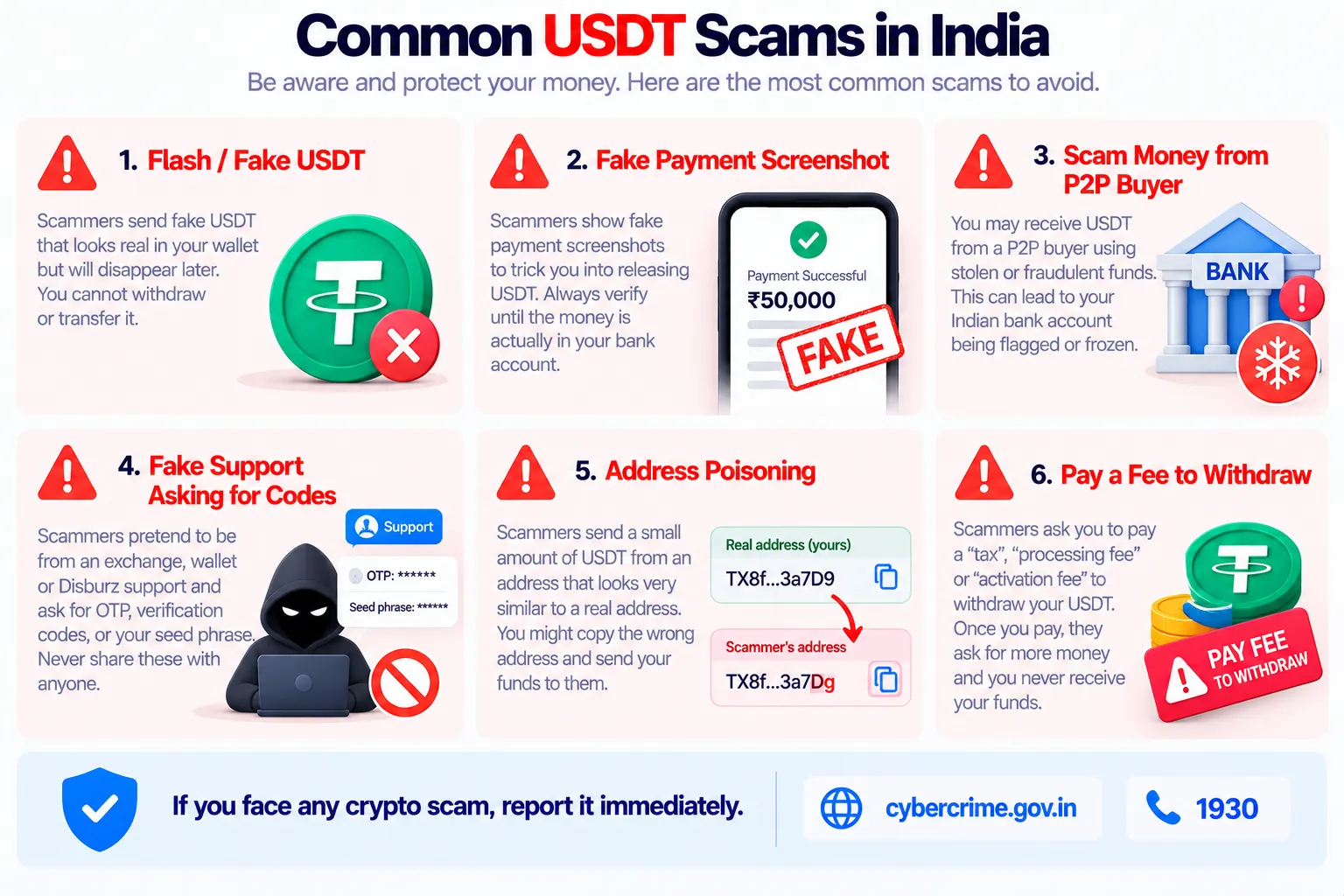
1. Flash or fake USDT
Scammers send a token that looks like USDT in your wallet but isn't the real Tether contract, or show a fake “flash” balance that disappears. Real USDT on TRON has one official contract. Check the token on Tronscan before releasing anything, and never accept “flash USDT software” offers: they're all scams.
2. Fake payment screenshots
On P2P, a buyer sends a screenshot of a UPI or bank payment that never happened, or an edited one. Only release crypto after you see the credit in your own bank app, not in a screenshot.
3. Scam money from a “buyer”
The buyer pays you with money stolen from a fraud victim. You did nothing wrong, but when the victim complains, your bank account is frozen. This is the most damaging scam for Indian sellers. See bank account frozen after P2P.
4. Fake support and impersonation
Someone posing as exchange or Disburz support messages you on Telegram or WhatsApp, asks for your login code, password or seed phrase, or sends you to a look-alike website. Real support never asks for these.
5. Address poisoning
A scammer sends you a tiny transfer from an address that looks like one you use (same first and last characters). Later you copy the wrong one from your history. Always copy addresses from the source, not your transaction history, and use the address checker.
6. “Pay a fee to withdraw”
Fake trading sites, airdrops and “investment groups” show big profits, then ask for a fee, tax or “unlock” payment before you can withdraw. You'll never get the money. Stop paying.
7. Recovery scams
After you lose money, “recovery agents” promise to get it back for an upfront fee. They can't. Report it instead.
If you've been scammed
- Stop sending money and change passwords.
- Report it on the national cybercrime portal or call 1930, with transaction hashes and UTRs.
- Tell your bank and the exchange involved; they may be able to freeze the scammer's funds.
The safest way to sell USDT is to a business that pays you from its own account with a UTR. See how to sell USDT without P2P.