Safety · 6 min read
Is P2P Crypto Trading Legal in India? (2026)
P2P crypto trading isn't banned in India, but it's taxed and can get your bank account frozen. The law, your tax duties and how to sell safely.
By Bryan Aaron · Updated
Quick answer
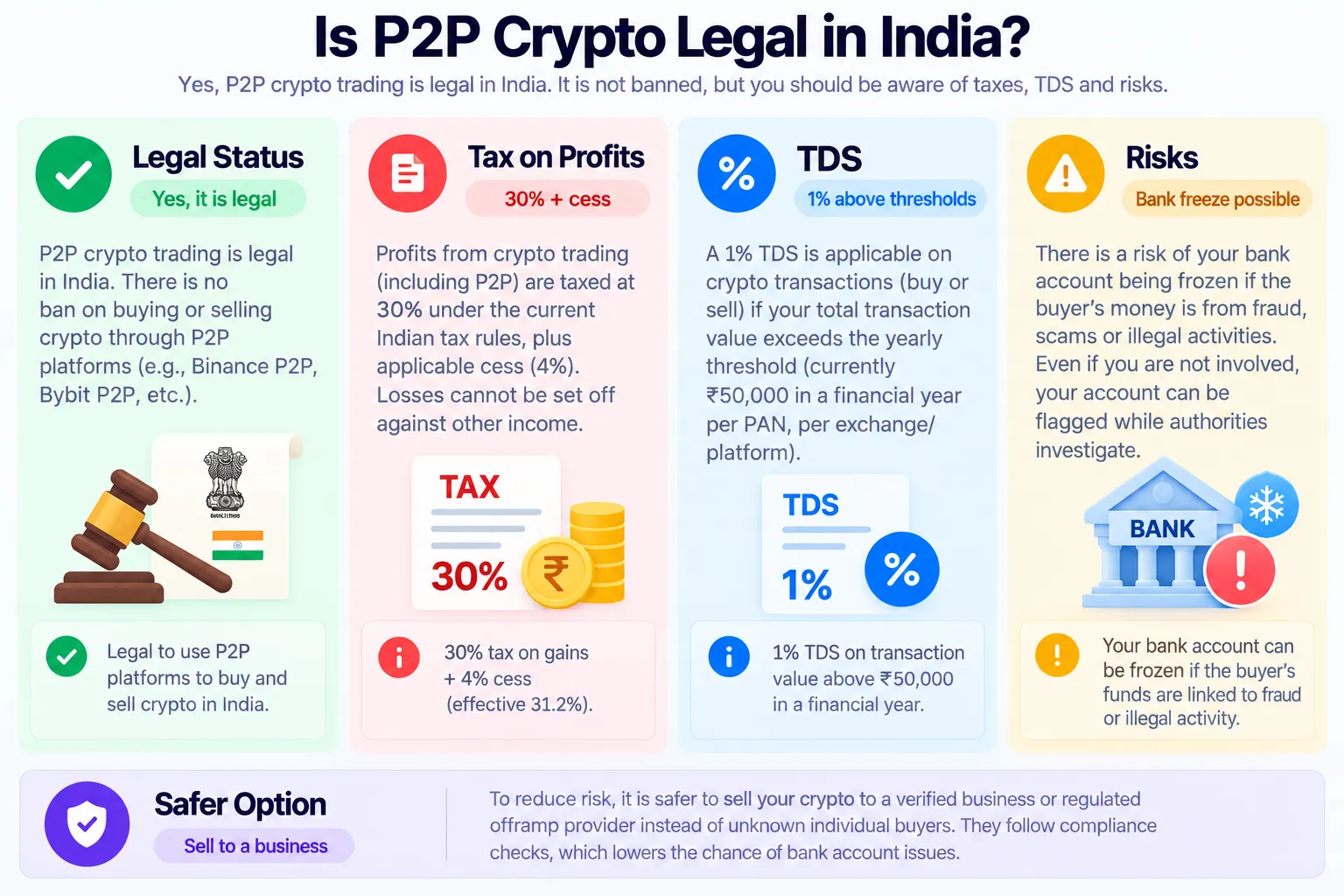
Yes, P2P crypto trading is legal in India: no law bans selling your own crypto to another person. But gains are taxed at 30% plus cess, 1% TDS applies above yearly thresholds, and if a buyer pays you with scam money, police can have your bank account frozen. Selling to a business avoids that risk.
Many people in India sell USDT on P2P marketplaces and then wonder if they've broken the law, especially after hearing about frozen bank accounts. The short version: P2P crypto trading is not banned in India, but it is taxed, and it carries real legal and banking risk because you can't control where a stranger's money comes from.
Is crypto itself legal in India?
Yes, owning, buying and selling crypto is legal. Crypto isn't legal tender, and India hasn't passed a law that regulates it fully. Instead, it's covered by tax law and anti-money-laundering rules:
- Tax. Crypto is a virtual digital asset (VDA). Gains are taxed at a flat 30% plus cess, losses can't be set off, and 1% TDS applies to transfers above yearly thresholds.
- Anti-money-laundering. Since March 2023, businesses that exchange, transfer or hold VDAs for others are covered by the Prevention of Money Laundering Act and must register with the Financial Intelligence Unit (FIU-IND), keep records and report suspicious transactions.
Is P2P crypto trading legal?
There is no law that bans P2P trading between individuals. Selling your own USDT to another person for INR is a lawful sale of a VDA, as long as the money is clean and you pay tax on any gain. What creates problems isn't the trade itself but the money that comes with it.
The legal duties still apply to you on P2P:
- Gains are taxable at 30% plus cess, and you must report each sale in the VDA schedule of your income tax return.
- 1% TDS applies above the yearly thresholds. On a P2P marketplace the buyer is technically responsible for deducting it, which in practice rarely happens. That's one reason tax notices follow P2P activity.
- You must not knowingly help move proceeds of crime, even as a “seller”.
Why P2P sellers get their bank accounts frozen
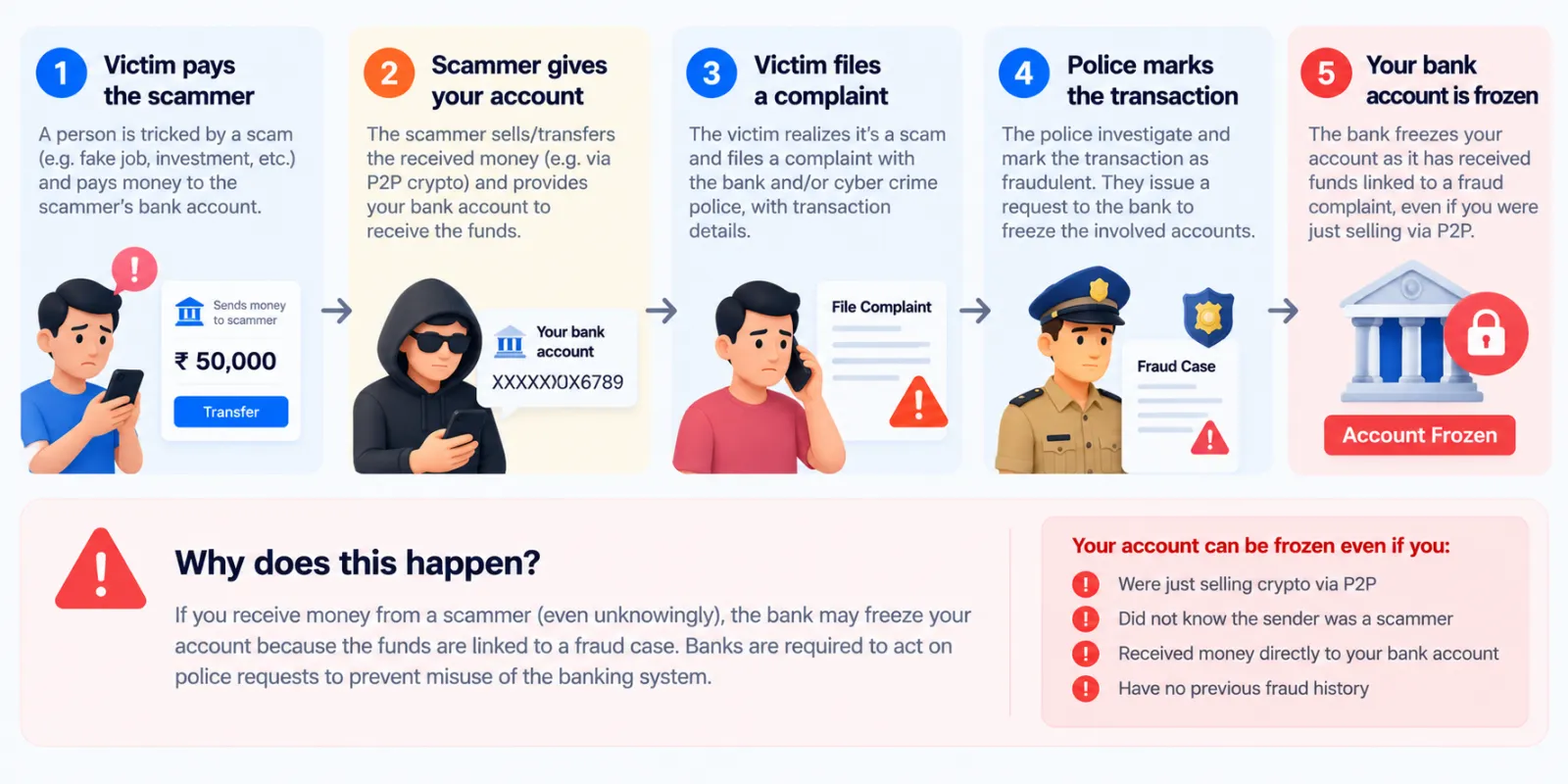
The usual chain: a scammer tricks a victim into paying money, then uses that money to buy USDT from you on P2P. The victim files a complaint on the national cybercrime portal, the police trace the money to your account and ask your bank to freeze it. You did nothing wrong, but the rupees you received are linked to a crime, so your account is caught in the investigation.
Courts have repeatedly said freezes should be proportionate, often limited to the disputed amount, and that a seller who acted in good faith should be heard. But getting a freeze lifted still takes time, paperwork and sometimes a court petition. If it's happened to you, follow what to do when your account is frozen after P2P.
How to sell crypto in India legally and safely
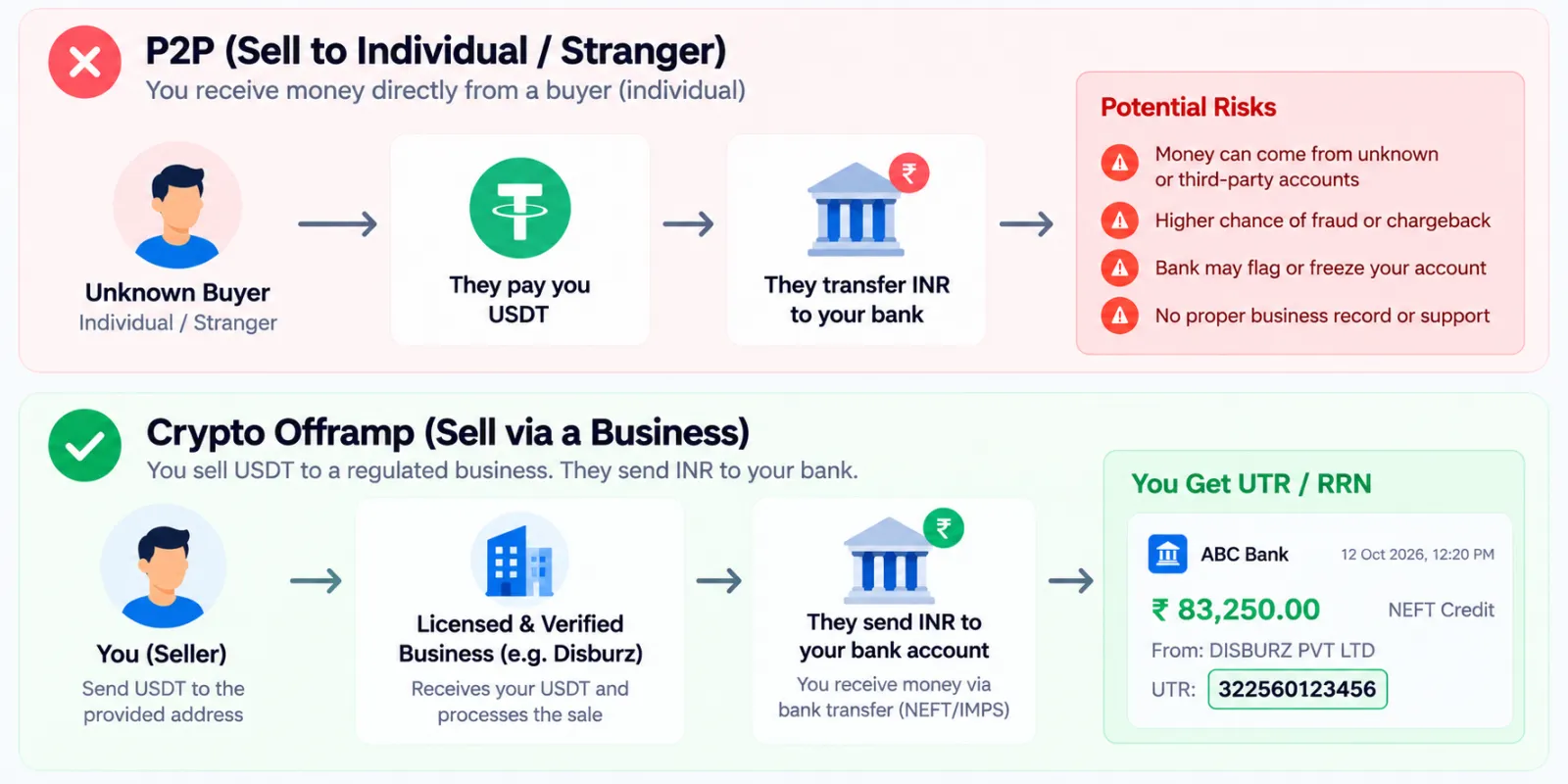
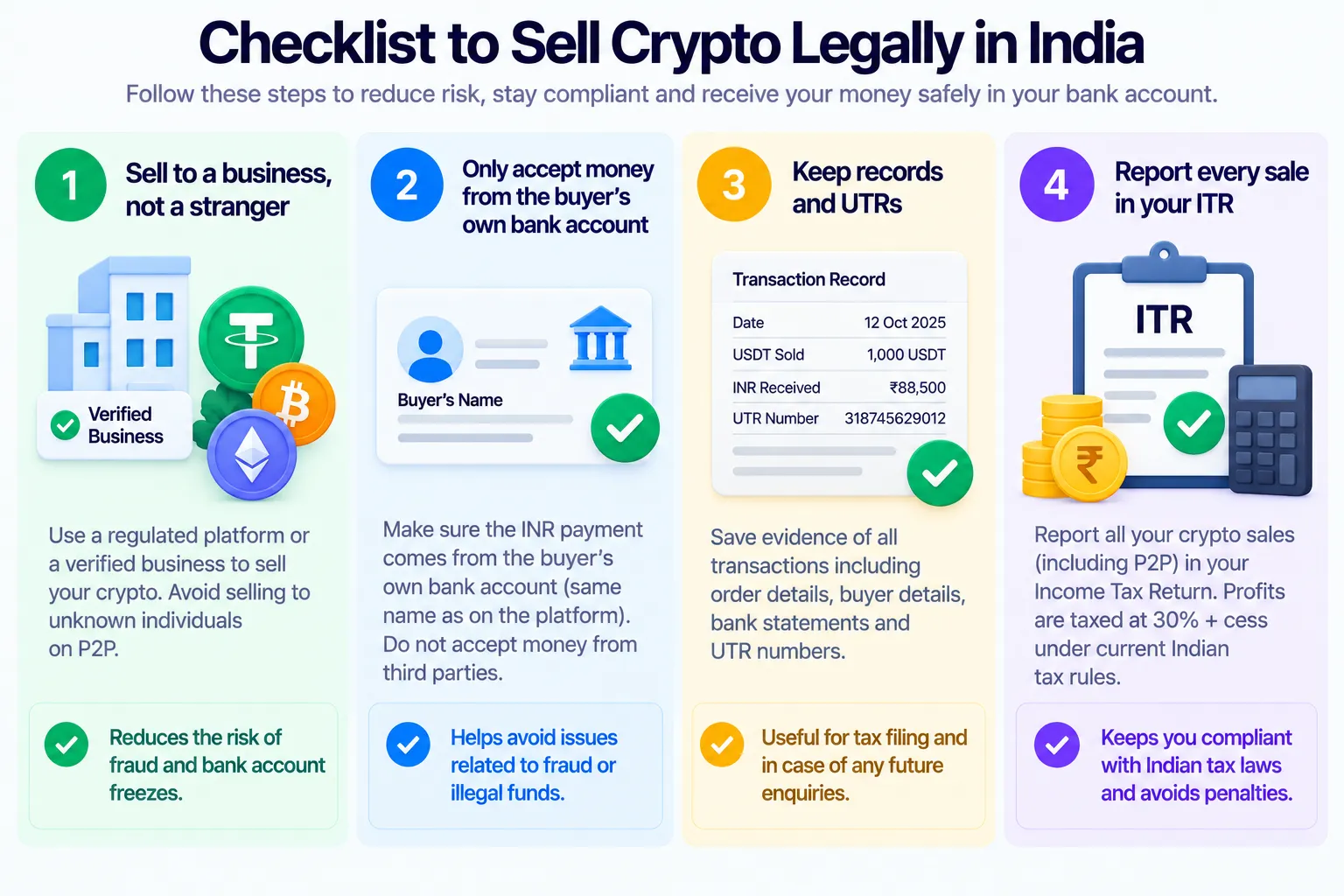
- Sell to a business, not a stranger. An Indian exchange or a direct offramp pays you from its own bank account, so the money can't be a fraud victim's.
- If you do use P2P, only accept payment from a bank account in the buyer's own verified name, never from third parties, and never release USDT before the money has cleared.
- Keep records of every trade: the platform statement, the buyer's details, bank credits and UTRs.
- Pay your tax. Report every sale and keep proof of what you paid for the crypto. See crypto tax and TDS in India.
Is selling through an offramp like Disburz legal?
Yes. Selling your own crypto to a business that pays you by bank transfer is a normal sale. With Disburz, a payout partner sends INR to your bank by IMPS, NEFT or RTGS and you get a UTR for every payout, which gives you a clean record for your bank and your tax return. Compare the ways to sell in how to sell USDT without P2P.