
How-to · 5 min read
What Documents Do You Need to Sell USDT in India?
Which documents you need to sell USDT in India on an exchange, on P2P and on Disburz, plus the records to keep for your bank and your tax return.
By Bryan Aaron · Updated
Quick answer
It depends on where you sell. Indian exchanges usually ask for PAN, Aadhaar, a selfie and bank verification before you can withdraw INR. On Disburz there are no documents to upload: you sign up with your name, email and phone and add a bank account in your own name. Whatever you use, keep records for tax.
Before a first sale, most people want to know what they'll be asked for. The answer depends on where you sell: an exchange asks for the most, a direct offramp for the least. And whichever route you take, there are a few records you should keep yourself.
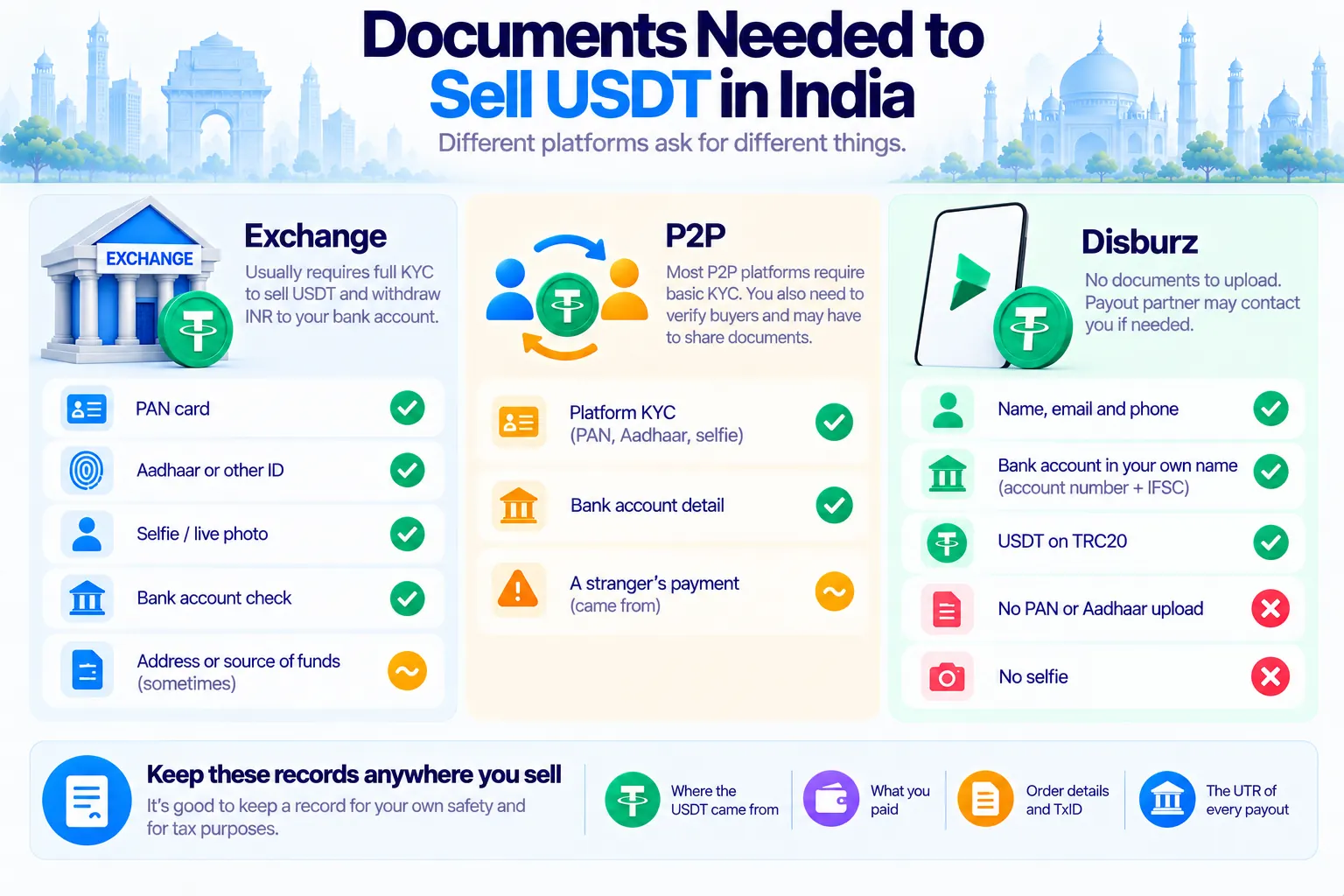
Documents by route
Indian exchange
Before you can withdraw INR, exchanges usually ask for full KYC:
- PAN card
- Aadhaar or another government ID
- A selfie or live photo
- A bank account in your name, usually checked with a small test deposit
Verification can take minutes or days, and some exchanges ask for more, such as proof of address or source of funds, for larger amounts.
P2P marketplace
The marketplace itself usually requires KYC on your account. On top of that, each trade involves a stranger's bank details and payment proofs. That's the part that causes trouble: you can't check where the buyer's money came from. See P2P vs crypto offramp.
Disburz
There are no documents to upload on Disburz. You need:
- Your name, email and phone to sign up
- A bank account in your own name: holder name, account number and IFSC. Your bank has already verified you for that account.
- USDT on TRC20 in a wallet or exchange account you can send from
No PAN or Aadhaar upload and no selfie. Our payout partner Trans Ramp runs its own checks on each sale and may contact you if it needs more information. More in sell USDT without KYC documents.
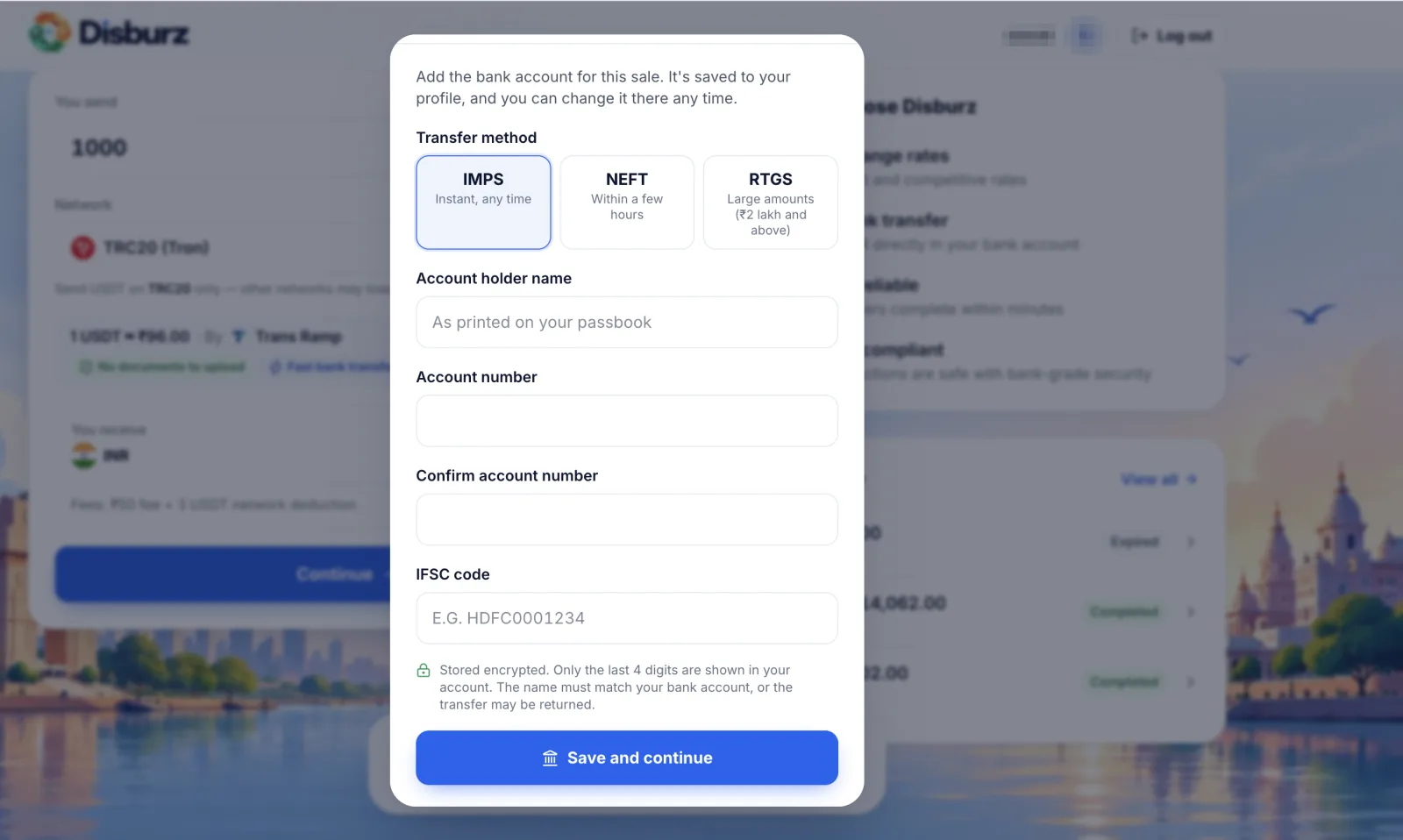
Why your bank account must be in your own name
Every route pays INR only to an account in the seller's name, and for good reason. Money landing in a friend's or relative's account looks like someone else's funds passing through, which is one of the patterns banks flag. See how much USDT you can sell without bank problems.
Records to keep, whichever route you use
No platform asks for these up front, but your bank or the tax department may later. Keep them in one folder:
- Where the USDT came from: exchange purchase history, a client invoice if you were paid in USDT, or the wallet transaction.
- What you paid for it in INR. Only the purchase cost can be deducted from your gain.
- Each sale: the order details, the amount of USDT sent and the blockchain transaction ID.
- Each payout: the INR received and the bank UTR. On Disburz the UTR is emailed to you.
These records fill in the VDA schedule of your income tax return and answer most bank questions in one email. See crypto tax and TDS in India.
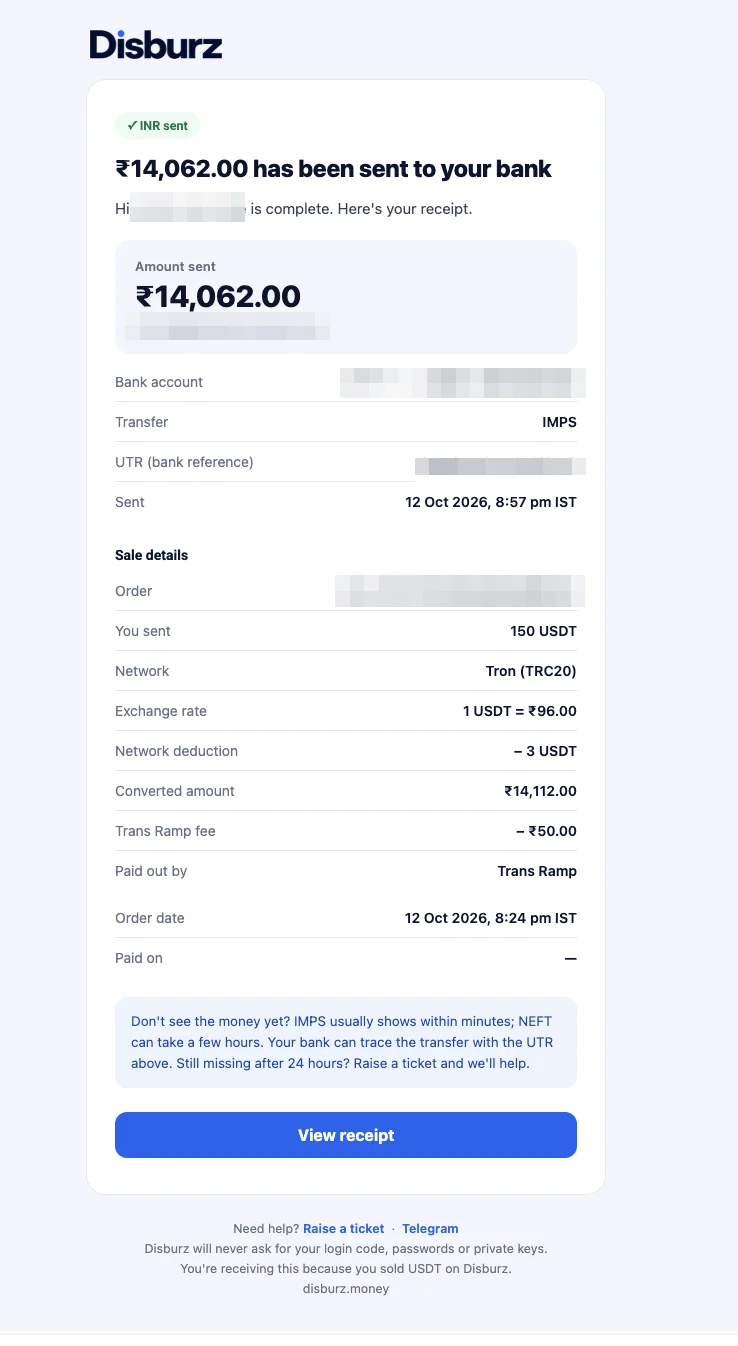
Fewer documents doesn't mean less tax
Not uploading documents changes how fast you can sell, not what you owe. Gains on USDT are taxed at 30% plus cess whatever platform you use, and you report them under your own PAN when you file. See is it legal to sell USDT in India.
Ready to sell?
With your bank details and your USDT ready, follow how to sell USDT for INR, or check what you'd receive in the USDT to INR calculator.