
How-to · 8 min read
How to Withdraw Forex Profits to an Indian Bank Account (2026)
How Indian traders move forex profits from Exness, XM or Vantage into a bank account: USDT on TRC20, the RBI Alert List and FEMA, freeze risk and tax.
By Bryan Aaron · Updated
Quick answer
Most offshore forex brokers pay Indian traders in USDT, usually on TRC20. Withdraw it to a direct offramp like Disburz and receive INR by IMPS with a UTR. Know the rules first: many popular brokers are on RBI's Alert List of entities not authorised to deal in forex under FEMA, and the profits are taxable.
General information, not legal or tax advice. Forex rules for Indian residents are strict; check your own situation with a lawyer or chartered accountant.
You traded with an offshore broker, made a profit, and now want it in your Indian bank account. Bank wires from these brokers to India are slow, often refused, and attract questions from your bank. That's why most Indian traders withdraw in USDT. Here is how that works, what the rules actually say, and how to avoid the two things that hurt most: a frozen bank account and a tax notice.
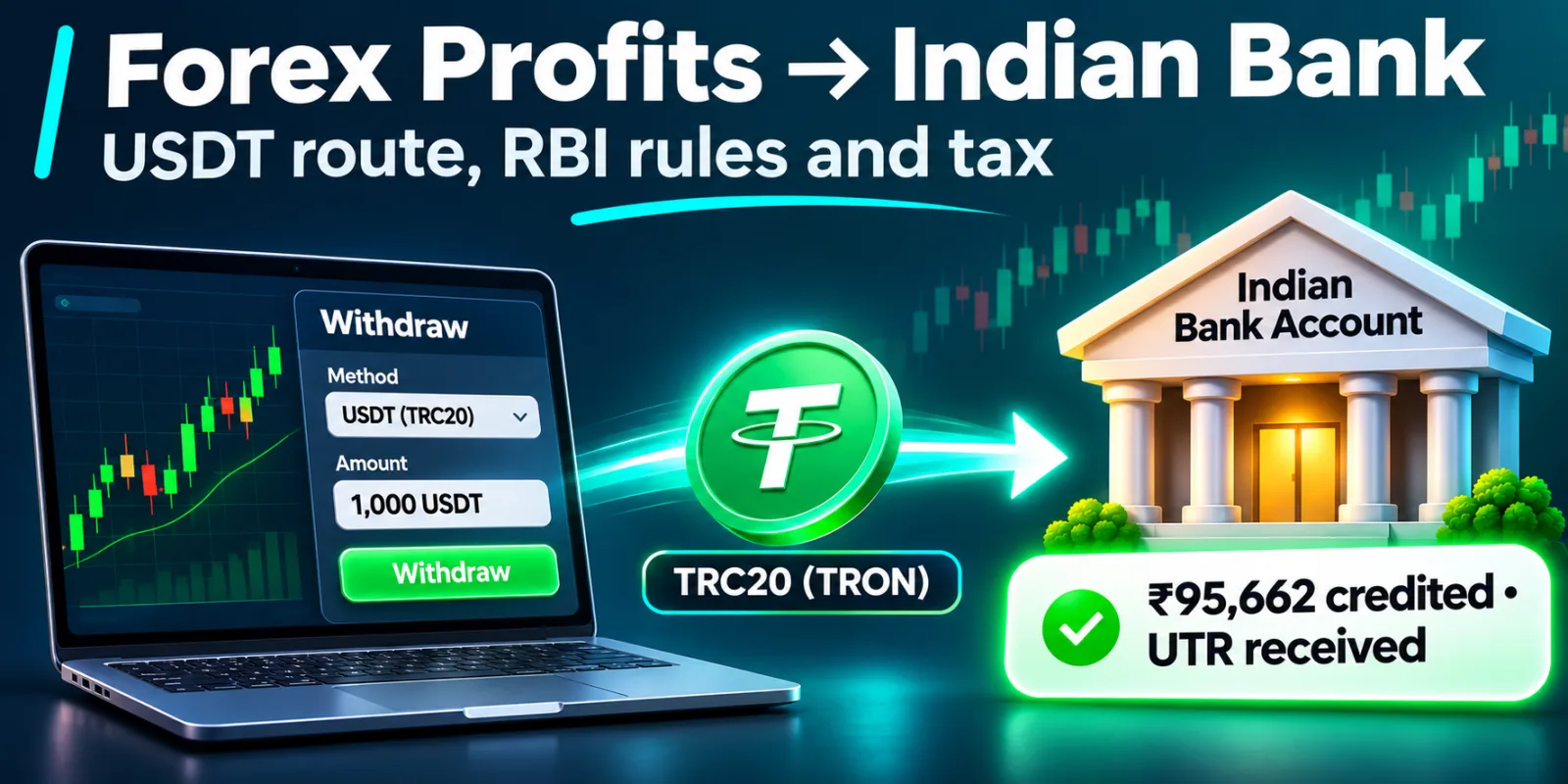
How forex brokers pay Indian traders
| Withdrawal method | Reality for Indian traders |
|---|---|
| Bank wire to India | Slow (days), often refused or returned, and the inward remittance draws questions from your bank |
| UPI or “local transfer” | Usually paid by a local agent of the broker: money from a stranger, with the same freeze risk as P2P |
| USDT (TRC20 or ERC20) | Fast, widely supported by brokers such as Exness and Vantage, but you still need to turn it into rupees |
Know the rules first
For Indian residents, forex trading is allowed only in a narrow form: currency pairs on recognised Indian exchanges or on platforms authorised by the Reserve Bank of India. RBI keeps an Alert List of entities that are neither authorised to deal in forex under the Foreign Exchange Management Act (FEMA) nor authorised to run forex trading platforms. The 19 November 2025 update has 95 names, including:
- Brokers: Exness, XM, Vantage Markets, IC Markets, OctaFX, Pepperstone, HFM, FBS, Tickmill, FXTM, eToro, Olymp Trade, Quotex.
- Prop firms: FTMO, FundedNext, Smart Prop Trader.
- Even the software names MetaTrader 4 and MetaTrader 5.
RBI says the list isn't exhaustive, so a broker missing from it isn't automatically authorised. It has also said that sending money abroad for online forex trading isn't allowed under the Liberalised Remittance Scheme, which is why banks block card and UPI deposits to these brokers.
What enforcement looks like: FEMA allows penalties of up to three times the amount involved, and the Enforcement Directorate has gone after platforms and promoters. In October 2025 it attached about ₹2,385 crore of crypto in its OctaFX case (Octa disputes the allegations). If you're trading with a listed broker, take this seriously and get proper advice.
Step by step: broker to your bank account
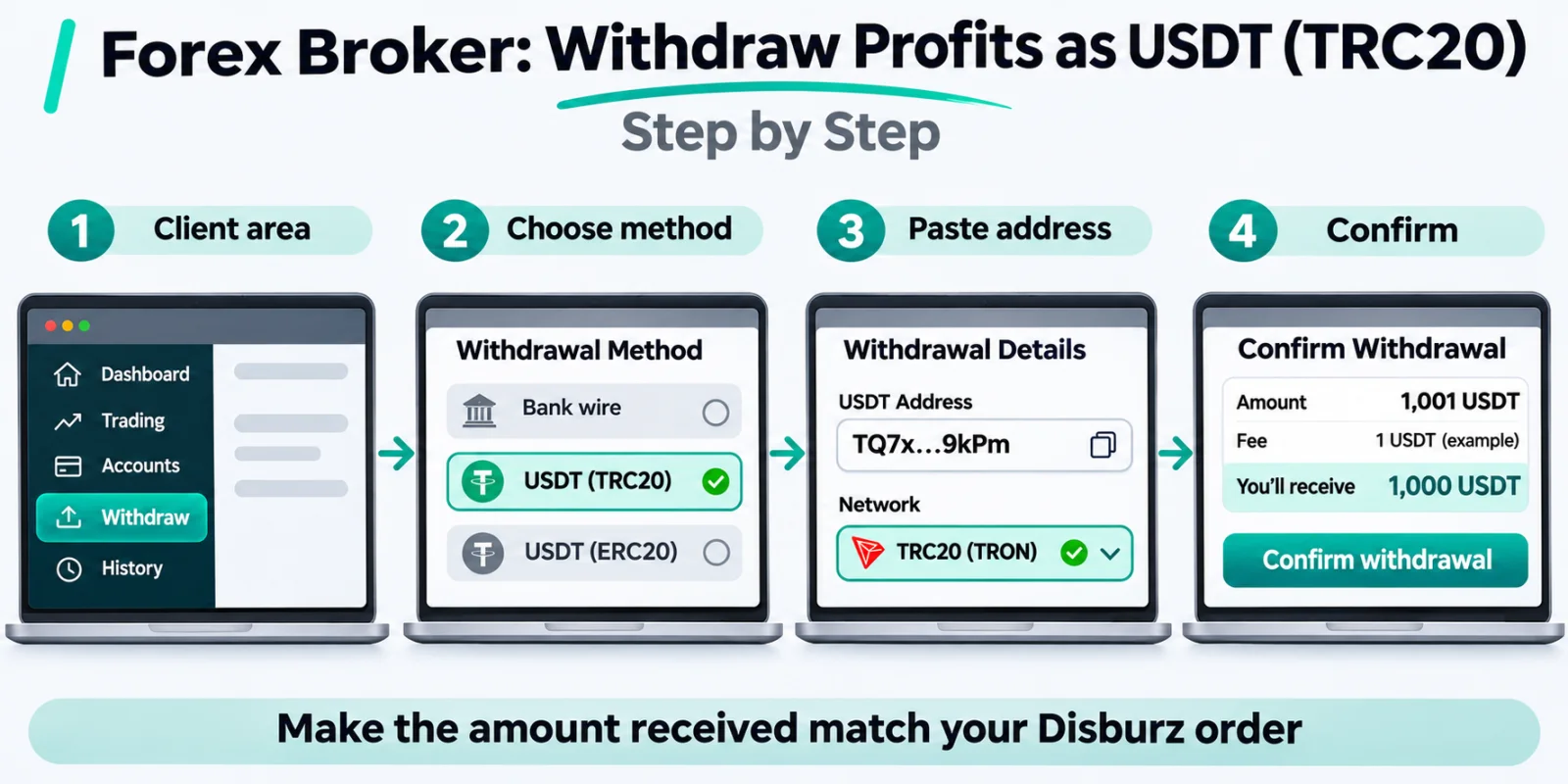
- Check your broker's withdrawal options and pick USDT TRC20. Most brokers withdraw back to the method you deposited with first, then allow crypto for profits.
- Get a Disburz quote for the amount, add your bank account (in your own name), and confirm. Copy the deposit address; it starts with
T. - Request the withdrawal in your broker's client area, paste the address, and make sure the network is TRC20 (TRON). The broker shows its fee and the amount that will arrive.
- Wait for the broker to process it. Exness, for example, says non-instant withdrawals are processed within 24 hours.
- Receive INR. Once the USDT confirms on TRON (about a minute), Disburz pays your bank by IMPS, NEFT or RTGS and emails you the UTR.
What 1,000 USDT arriving on TRC20 pays at today's quote (fees: ₹50 fee + 3 USDT network deduction):
| Arrives at Disburz | 1,000 USDT (TRC20) |
| Network deduction | − 3 USDT |
| Rate | 1 USDT = ₹96.00 |
| Converted value | ₹95,712.00 |
| Fee | − ₹50.00 |
| Paid to your bank | ₹95,662.00 |
|---|
Paid on another network, such as ERC20? Receive it at an exchange that supports that network, or ask your broker for TRC20. Not sure which network you have? Read how to check your USDT network.
Avoid the bank freeze
Most frozen accounts among traders come from P2P: you sell USDT to a stranger, the stranger's money turns out to be linked to a fraud complaint, and police freeze your account, sometimes for the whole balance. The same applies to a broker's “local agent” paying you by UPI.
- Take payouts from a business that pays from its own account, with a UTR you can show your bank.
- Don't split a big withdrawal into many small P2P trades; each one is a new stranger.
- Keep your broker statements and withdrawal records together with the UTRs.
Already frozen? Read bank account frozen after crypto P2P.
Tax on forex profits
- Taxable regardless of where you traded. Profits from an offshore broker are income for a resident.
- Usually business income. Offshore forex trading is generally treated as speculative business income, taxed at your slab rate, with speculative losses set off only against speculative gains.
- The USDT step can add a layer. If you receive USDT and sell it, the sale may also fall under the virtual digital asset rules (30% plus cess on gains, 1% TDS above thresholds). See crypto tax and TDS in India.
- Keep records: broker statements, deposits, withdrawals, transaction hashes and payout UTRs.
Because the trading itself raises FEMA questions, have a CA who understands both sides prepare your return rather than guessing.
Mistakes to avoid
- Choosing ERC20 or BEP20 for a T address. The network must match. Use the address checker if unsure.
- Trusting “guaranteed profit” account managers. Most forex losses in India come from scams posing as brokers or signal groups.
- Paying a “withdrawal tax” or “release fee” to get your money out. Real brokers deduct fees from the withdrawal; they don't ask for a separate payment.
- Using someone else's bank account. Payouts must go to an account in your own name.
Funded by a prop firm instead? See prop firm payout to an Indian bank account. Made the money in crypto? See cash out crypto trading profits.